Health, belonging, and advocacy

— for all of us.

Serving Greater Dayton & Miami Valley, Ohio | Women’s Health Equity

HUES Women’s Health Advocacy Institute advances health equity for Black, Indigenous, Latina, Asian American, Indian American, Pacific Islander, and Middle Eastern women in the Greater Dayton region.

Juneteenth + World Sickle Cell Day

Freedom and health have always been connected.

On June 19, the world observes two things at once. Most people know one. Both of them matter deeply to the women HUES serves.

A Disease That Has Always Known Our Names

Sickle cell disease is an inherited blood disorder in which red blood cells become rigid and crescent-shaped rather than round and flexible. These misshapen cells die early and often become lodged in small blood vessels, restricting blood flow and leading to serious complications throughout the body -- including severe pain, anemia, stroke, and organ damage. Office of Minority Health

About 100,000 people in the United States live with sickle cell disease, and more than 90% are non-Hispanic Black or African American. The disease also disproportionately affects people of Middle Eastern, South Asian, Mediterranean, and Caribbean descent. This is not a coincidence. Sickle cell disease is genetically linked to regions of the world where malaria has historically been prevalent -- many of the same regions from which enslaved people were taken to build this country. Office of Minority Health

The history of sickle cell disease and the history of Black people in America are intertwined at the root. That connection is exactly why June 19 is marked for both observances.

June 19, 1865: A Day of Expanded Freedoms

Juneteenth marks the day federal troops arrived in Galveston, Texas, to ensure that all enslaved Africans were freed -- a full two and a half years after the signing of the Emancipation Proclamation. The news of freedom had been deliberately withheld. Enslavers in Texas continued to force labor from Africans who were legally free, because no one came to enforce what had already been declared.

What arrived in Galveston on June 19 was not just information. It was an overdue acknowledgment of a humanity that should never have been in question.

Juneteenth was celebrated in Texas among the families of formerly enslaved communities going back to the 1800s, and the annual celebrations spread across the nation with the Great Migrations of Black citizens from the South to the North and West. For generations, Black communities kept this holiday alive in cookouts, church services, readings, and gatherings -- long before the broader country paid attention. Juneteenth became a federal holiday in 2021, in large part because of the tireless advocacy of Opal Lee, a Black woman activist from Texas who campaigned for that recognition well into her nineties. She is proof that one person's insistence on being heard can change the record of a nation. Emerson Today

But freedom announced has never been freedom fully realized. And nowhere is that clearer than in health care.

When Your Body Is Not Believed

Structural racism drives many health problems for people with sickle cell disease: poor insurance and care access, clinicians unfamiliar with best practices, little specialty care, and too little research compared with other chronic illnesses. People with sickle cell have long been dismissed in emergency rooms, labeled drug-seeking when in pain, and denied specialized care. This is a structural, not medical, failing—rooted in treating Black and Brown bodies as less urgent and less deserving of relief.

Black women are about three times more likely than White women to die from pregnancy-related causes, regardless of income or education. For Black women with sickle cell, the risk is even higher: maternal death is 4 to 11 times more likely, and they face greater chances of preeclampsia and of having stillbirths or premature babies.

These numbers represent real people—mothers, daughters, sisters, and neighbors in places like the Greater Dayton and Miami Valley region.

Progress Looks Like Pressure Applied Over Time

Women account for approximately 63% of all sickle cell disease hospitalizations in the United States.

Women carry this disease in their bodies, in their caregiving roles, and in the tiring work of dealing with systems not made for them. Yet for decades, research, resources, and policy lagged behind. The American Society of Hematology notes change is coming — slowly — because communities would not stay silent.

On June 19, 2025, the World Health Organization released its first global guideline for managing sickle cell disease in pregnancy. It addresses a growing problem that says pregnancy raises the body’s need for oxygen and nutrients, increasing risks for people with sickle cell. That this first guideline came out on Juneteenth is meaningful. who

Juneteenth shows that declaring rights is just the start. The real work is enforcing them — showing up in policy meetings, community centers, and doctor's offices to make sure promises become reality.

What HUES Holds on June 19

At HUES, we celebrate Juneteenth as a moment of joy, remembrance, and recommitment. We also use this day to name what is still unfinished.

The same systems that withheld news of freedom in 1865 are the systems that withhold adequate care today -- from Black women, Indigenous women, Latina women, Asian women, Pacific Islander women, and Middle Eastern women across the Miami Valley and across this country. Sickle cell disease is one window into that truth. Maternal mortality is another. Mental health access is another. The list is long.

We honor the ancestors who carried these diseases in their bodies while building a country that did not protect them. We stand with the women living with sickle cell disease right now who deserve comprehensive, compassionate, culturally responsive care. And we keep pushing -- because liberation and health have always been the same fight, and neither one is finished.

June · PTSD Awareness Month

What lives in the body has a name. And it deserves care.

June is National PTSD Awareness Month, a campaign supported by the U.S. Senate to raise awareness about post-traumatic stress disorder, its treatments, and the communities most in need of support. nih

Post-traumatic stress disorder, or PTSD, is a mental health condition that can develop after experiencing or witnessing a deeply traumatic event. Trauma is not a weakness. PTSD is not a character flaw. It is the body and mind doing what they were built to do -- hold on to danger as a form of protection -- long after the danger has passed.

Who carries this most?

The research is clear: women face a substantially higher risk of PTSD than men. A large analysis of prospective PTSD studies found that women already have higher PTSD prevalence and symptom severity than men at one month after trauma, and that severity remains higher across all follow-up periods (Kimerling et al., 2025; Wamser & Richardson, 2024). After natural disasters specifically, women face approximately 1.8 times the odds of developing PTSD compared to men (Andualem et al., 2024).

This is not simply about biology. Research using machine learning found a dose-response relationship between more strongly female-typed gendered social roles and sharply higher odds of past-year PTSD -- meaning the gendered conditions many women live inside, including care roles, economic disadvantage, and power imbalances, create risk beyond any individual traumatic event (Samuel & Lyness, 2025).

For women of color, the burden compounds.

Structural racism does not just shape opportunity. It shapes the body. It shapes the nervous system. And it shapes who recovers -- and who does not.

Among low-income Black and Latina postpartum women, research found that poverty, neighborhood crime, and racial discrimination clustered with traumatic events and were strongly linked to higher PTSD symptoms -- and that women of color experienced these compounding burdens at disproportionately higher rates than White women (Haering et al., 2024). Black women with high-risk pregnancies have described PTSD-like symptoms directly tied to pregnancy complications, traumatic births, and mistreatment by clinicians -- in a healthcare system described by researchers as embedded with systemic racial bias (Handiso et al., 2024). These women are not imagining it. The research confirms what they already know in their bodies.

Multiple studies show that racial discrimination and microaggressions are robustly associated with PTSD symptoms among Black Americans -- sometimes more strongly than cumulative trauma load itself (Haering et al., 2024; Lonnen & Paskell, 2024; Handiso et al., 2024; Cuervo & Venta, 2025). Discrimination is not a background stressor. For many Black women, it is the trauma.

Research on Black trauma survivors found that higher levels of racial discrimination predicted membership in nonremitting or delayed PTSD trajectories after injury, even after controlling for age, trauma history, education, and sex (Torres et al., 2024). In plain terms: racism makes PTSD harder to recover from.

Black women and lifetime risk.

Black Americans have higher lifetime PTSD prevalence and higher conditional risk -- meaning a greater likelihood of developing PTSD after trauma exposure -- than other racial groups, with more severe and chronic symptom courses and poorer prognosis over time (Haering et al., 2024; Lonnen & Paskell, 2024). Research on Black sexual trauma survivors found that gendered racial microaggressions -- particularly those involving beauty standards and sexual objectification -- significantly predicted PTSD severity and disrupted healing by worsening negative mood and trauma-related thinking (Samuel & Lyness, 2025). The specific ways racism shows up for Black women has specific effects on their mental health. This is not incidental. It is documented.

Latina and immigrant women carry migration as trauma.

For Latina immigrant women and families, PTSD is closely tied to post-migration stressors and immigration policy vulnerability -- including fear of deportation and exclusion from services -- rather than premigration trauma alone (Henderson et al., 2024). A study published in JAMA Network Open found that asylum seekers exposed to restrictive migration policies reported traumatic events during migration at dramatically higher rates, with 95% meeting PTSD criteria compared to 42% in a pre-policy group (Joyner et al., 2026). Immigration policy is a public health crisis. The data says so plainly.

Research on asylum-seeking Latina pregnant migrants underscores pervasive trauma exposure across all phases of migration -- before, during, and after -- with serious implications for both maternal and child health (Petranu et al., 2024; Cuervo & Venta, 2025).

The barrier that compounds everything.

Less than half of individuals from minority backgrounds with PTSD pursue treatment, with rates between 32.7% and 42% (Los Angeles Outpatient Center, 2025). This is not because trauma is less real for women of color. It is because the systems designed to treat it have not been built to reach, trust, or be trusted by them.

At HUES, we believe healing is not a privilege. Trauma-informed, antiracist care is not a specialty offering. It is the standard every woman in our community deserves. Knowing what trauma does to the body is the first step toward reclaiming it. If you or someone you love is carrying something heavy, you do not have to carry it alone.

Need support now?

Crisis Text Line: Text HOME to 741741 · Available 24/7

SAMHSA National Helpline: 1-800-662-4357 · Free, confidential, 24/7

Veterans Crisis Line: Dial 988, then press 1

988 Suicide and Crisis Lifeline: Call or text 988

What We Do

Community & Conversation

Access & Advocacy

We work to dismantle the structural barriers that keep women of color from receiving timely, dignified, and culturally responsive care -- in policy rooms and at the community level.

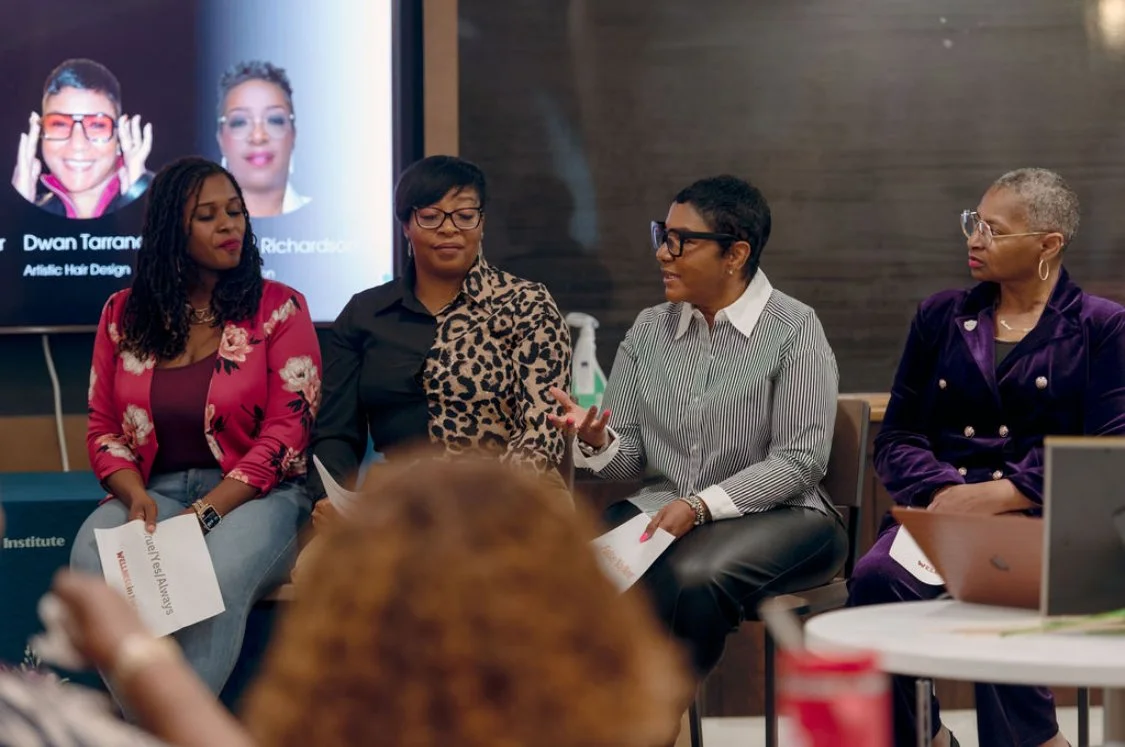
We create space where Black, Indigenous, Latina, Asian, Pacific Islander, and Middle Eastern women can speak honestly about their health -- and be heard without judgment.

Education & Engagement

Research & Resources

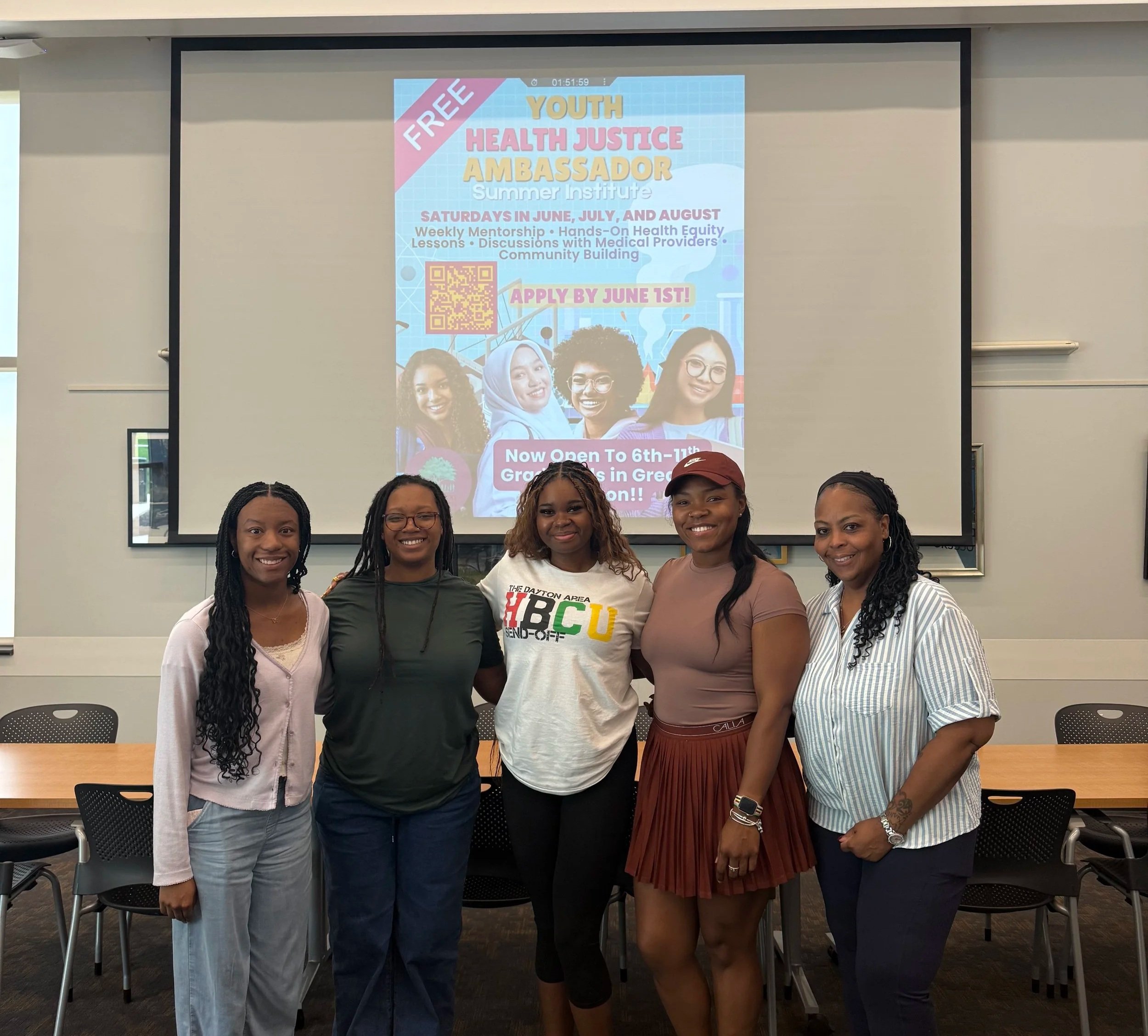
We build the next generation of health advocates -- from youth ambassadors to community members -- equipping them with the knowledge and language to fight for their own health and the health of those around them.

We translate complex health data into tools communities can actually use -- grounding our work in the science of structural racism, social determinants of health, and health equity.